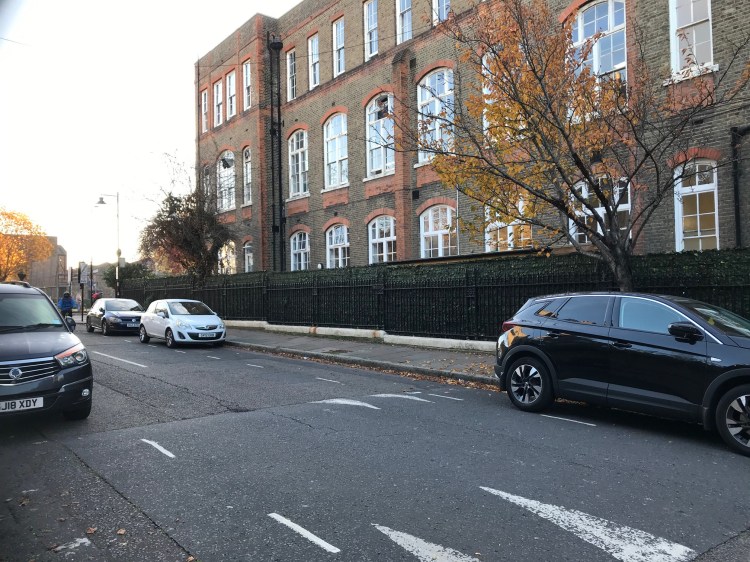
School should be a safe and healthy place for all children, yet when my son started in reception at Thornhill School, one of the things I noticed was his classroom was just a few metres from the road where cars would park and regularly idle their engines.
It felt unacceptable that all the early year classrooms open directly onto the road level with children aged 2-5 having to breath noxious air pollution during school hours.
I wanted to find a way to prevent the air pollution from coming into the classroom, so began looking at the options to increase physical barriers between the classes and the cars on the street. I soon realised the most effective option was to remove the problem itself, in other words, the cars.
I asked the council if the car parking spaces could be removed. This would be a double win, encouraging parents not to drive to school and reduced air pollution next to the school.
It took 18 months of campaigning for the council to finally agree to the idea. We held events, petitions, consultations and offered solutions. The council came up with a funded scheme that enables communities to initiate greening projects. We entered a design and bid for Thornhill School Living Street and were chosen as one of the first round of projects to win funding.
Two other projects by ICAP were also successful: Highbury Crescent on Highbury Fields and The Gower School.
The process of implementing the scheme involved more consultations, meetings and further designs which added extra time to the project. Overall, the result is far better thanks to the input from so many people.
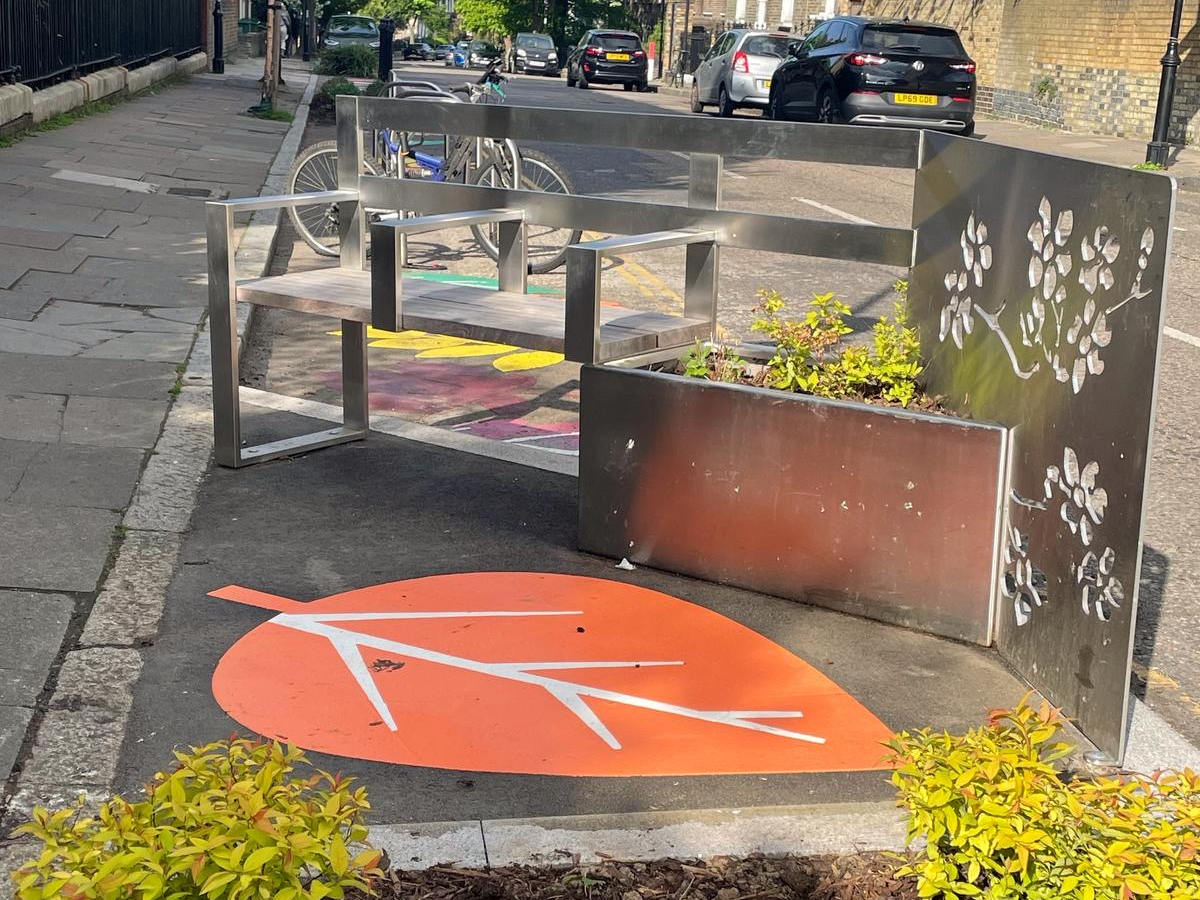
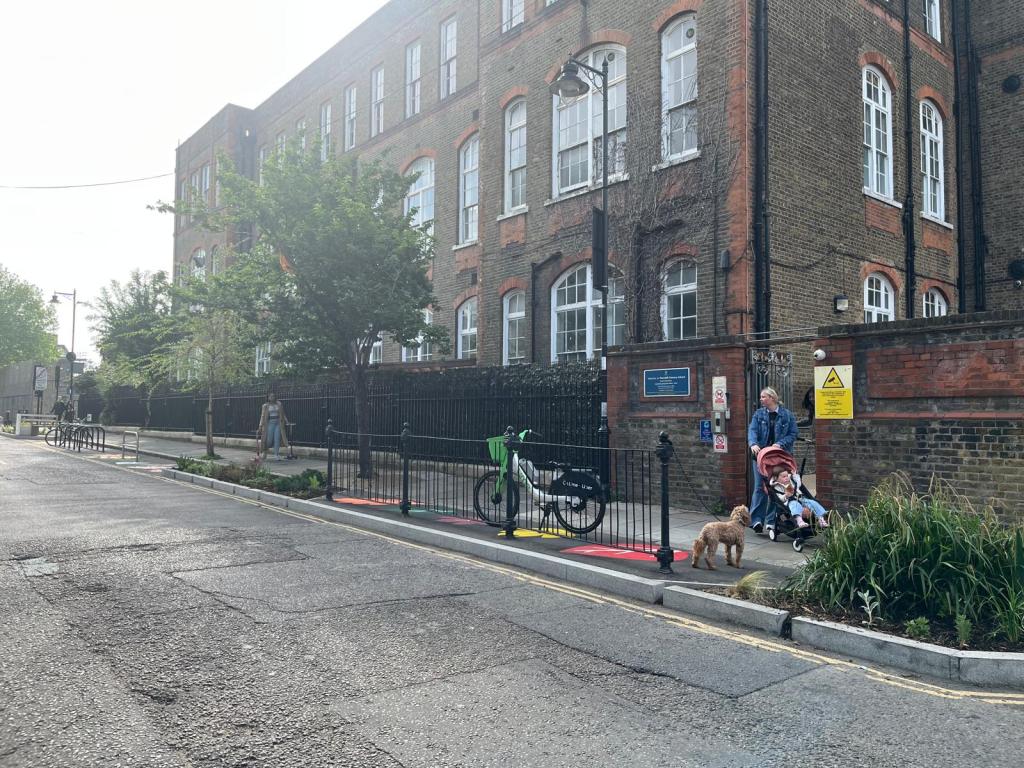
In short, the Thornhill School Living Street removes over 10 car parking spaces and replaces them in a way that shares the space more equitably with the wide number of people who use the road.
- There is increased pavement space by the school entrance. It used to get very busy with pram users, young children, parents, visitors, deliveries. Now there is enough space for people to come and go, and not have to step into the road.

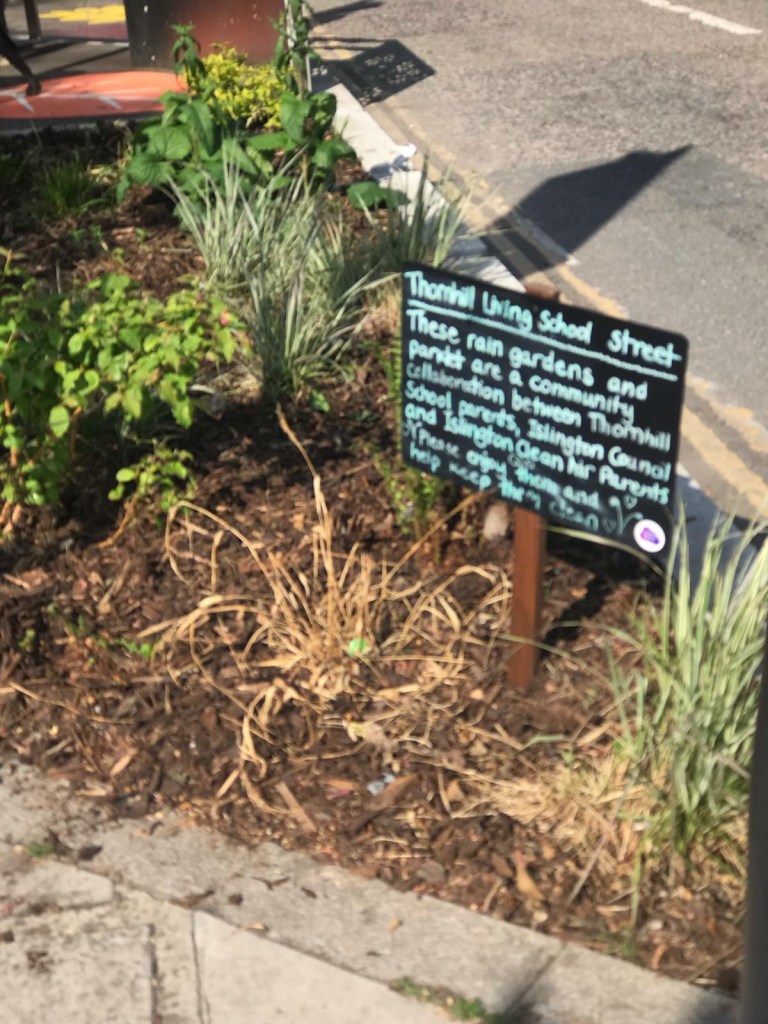
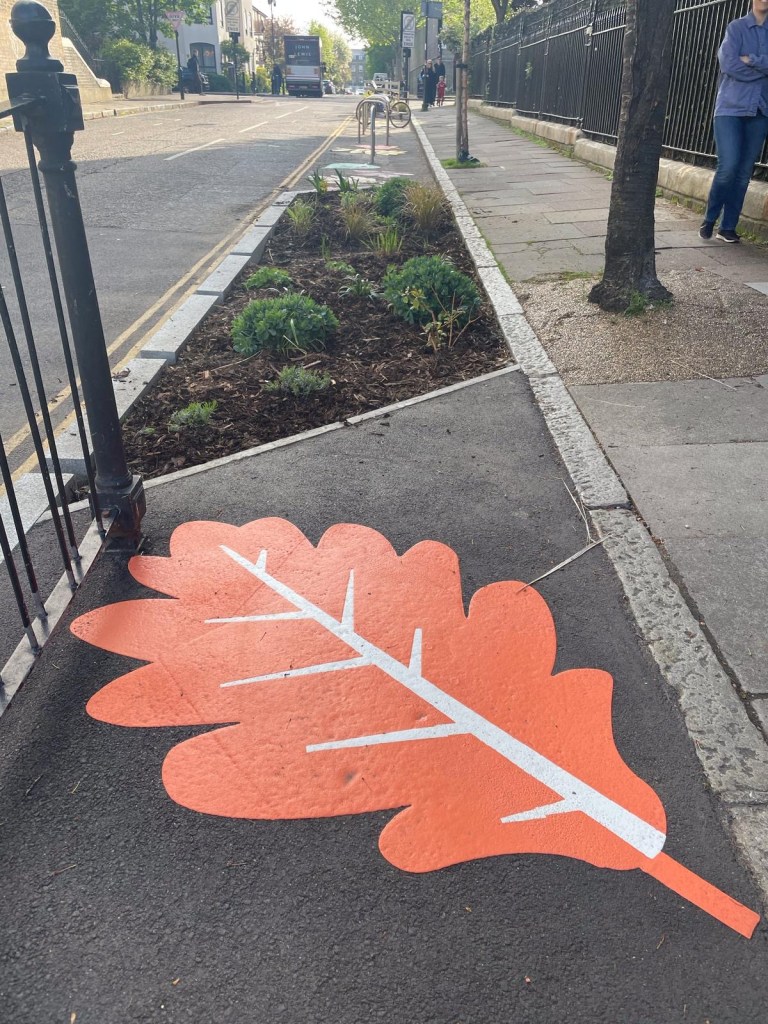
- Three rain-gardens have been planted with a variety of plants, bringing greenery and biodiversity to the space. We know that greener places enhance people’s mood and brings positive health benefits in addition to cleaner air.
- Cycle parking now offers a space for parents to park their bikes and cargo bikes where previously there wasn’t anywhere to leave them safely. Safe bike parking encourages parents to use active travel for the school run rather than drive.
- A bench has been installed which is often used by all members of the community from elderly walking up the hill, dog walkers, parents, people visiting the free little library as well as visitors for the school. It’s wonderful to see the variety of people who use it.
The rain gardens are well cared for by the parents and children who take turns to water and weed them and remove any litter in the area. This group of parents welcomes and encourages parents of children new to the school to join in and help maintain the rain gardens. The gardening sessions are very popular and we often get positive comments from people walking past.
The rain gardens act as sponges soaking up rainfall. Sited at the top of a hill, they help prevent heavy downpours from flooding at the bottom of the hill.
The council recently completed the project by painting brightly coloured leaves on the area which look great. These nature designs lift the otherwise grey tarmac and indicate to road users that this is a space for pedestrians and cyclists.
Cars can no longer park directly outside the school and idle their engines. There is plenty of parking available on the other side of the road and instead of cars, there is now space for adults and children alike.

My son has now turned 8 and is in Year 3. What started as a plan to reduce air pollution for the early years classes has taken 4 years to reach completion. While the project may have taken a long time to come to fruition, it will leave a legacy for all young children who start at Thornhill over the coming years.
This small but powerful project helps everyone from school children to parents, local people and passers-by to engage with the space and appreciate the benefits of nature in our very urban neighbourhood.
The project has been a big success thanks to the collaboration with the council who have ensured the project is well supported and successful.
 Islington Clean Air Parents