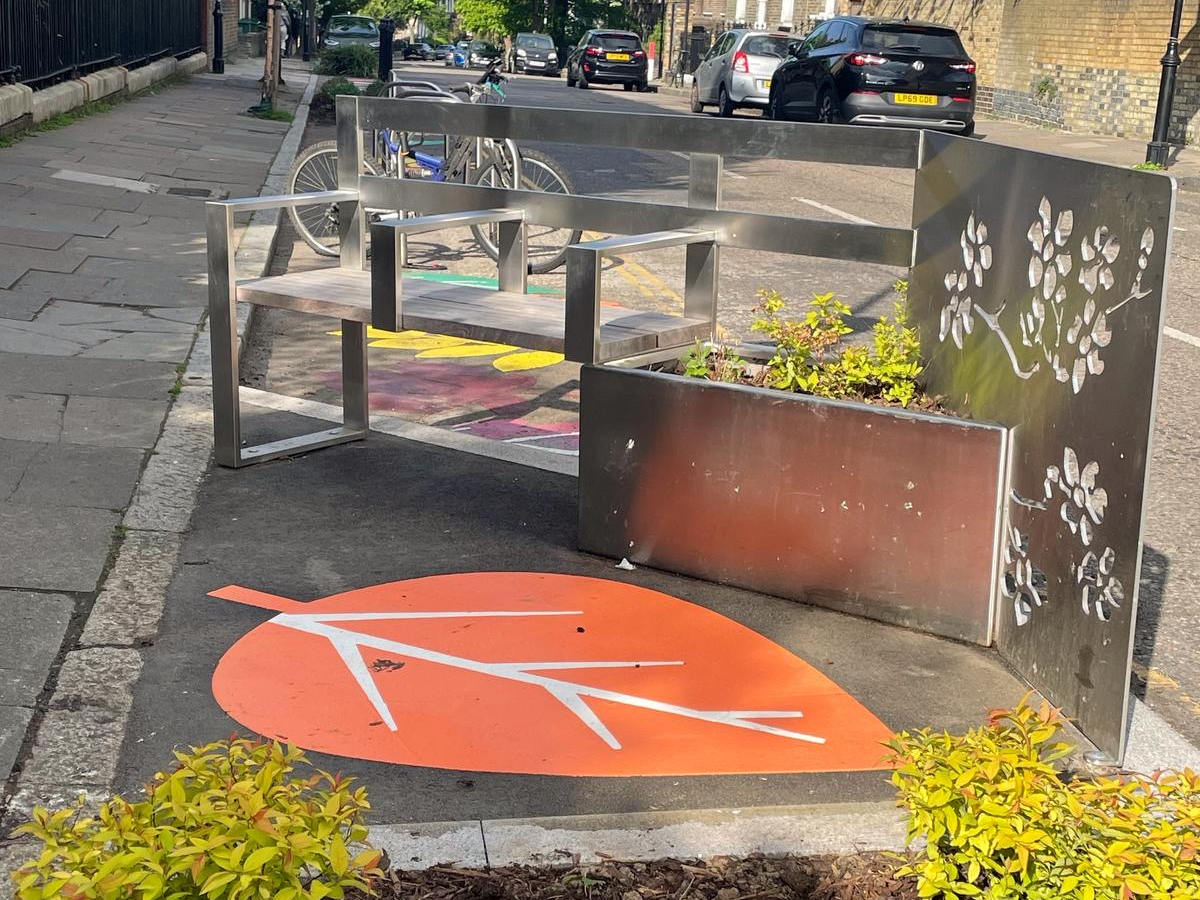
Thornhill School Living Street

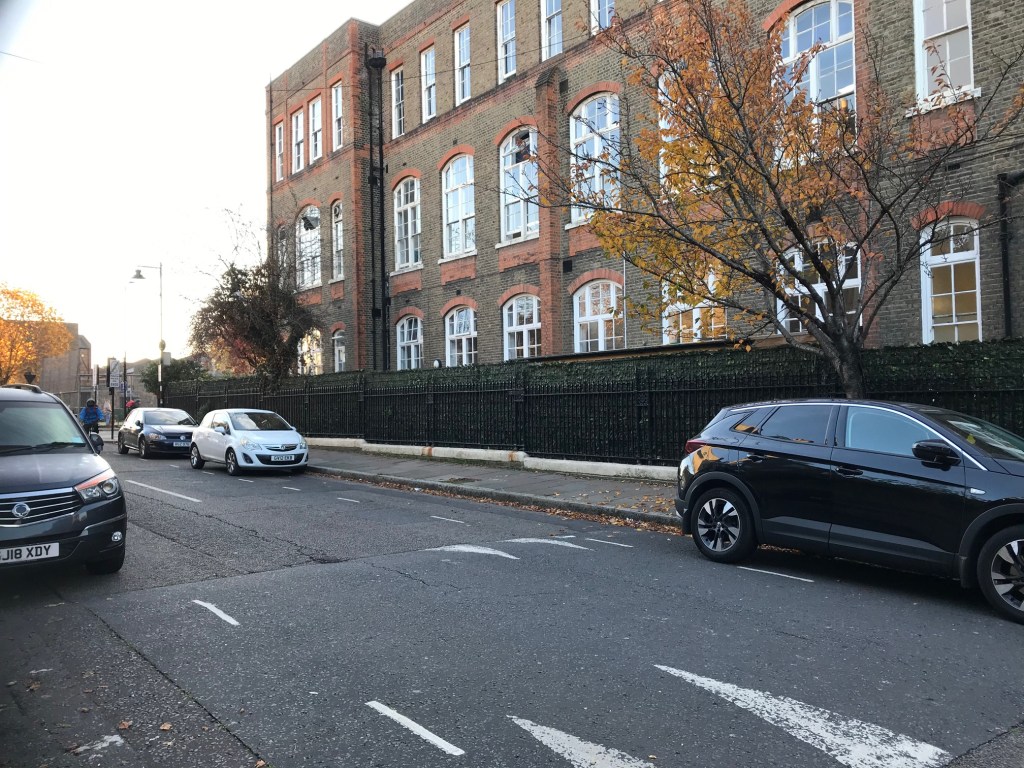
School should be a safe and healthy place for all children, yet when my son started in reception at Thornhill School, one of the things I noticed was his classroom was just a few metres from the road where cars would park and regularly idle their engines.

It felt unacceptable that all the early year classrooms open directly onto the road level with children aged 2-5 having to breath noxious air pollution during school hours.

I wanted to find a way to prevent the air pollution from coming into the classroom, so began looking at the options to increase physical barriers between the classes and the cars on the street. I soon realised the most effective option was to remove the problem itself, in other words, the cars.

I asked the council if the car parking spaces could be removed. This would be a double win, encouraging parents not to drive to school and reduced air pollution next to the school.

It took 18 months of campaigning for the council to finally agree to the idea. We held events, petitions, consultations and offered solutions. The council came up with a funded scheme that enables communities to initiate greening projects. We entered a design and bid for Thornhill School Living Street and were chosen as one of the first round of projects to win funding.

Two other projects by ICAP were also successful: Highbury Crescent on Highbury Fields and The Gower School.

The process of implementing the scheme involved more consultations, meetings and further designs which added extra time to the project. Overall, the result is far better thanks to the input from so many people.

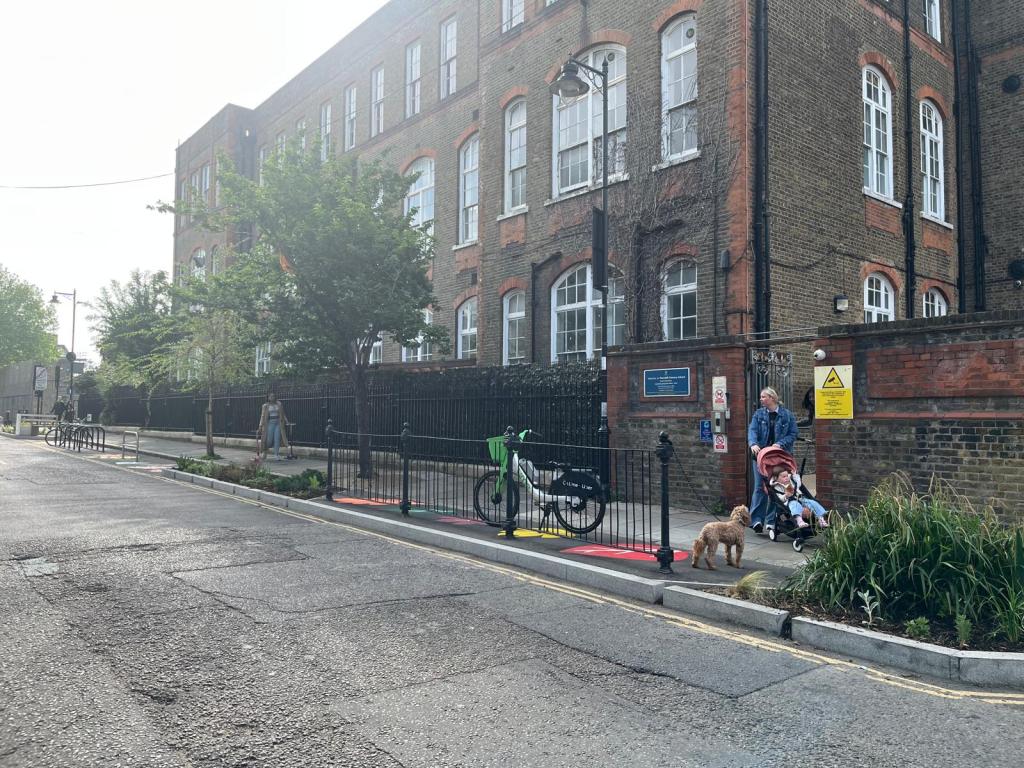
In short, the Thornhill School Living Street removes over 10 car parking spaces and replaces them in a way that shares the space more equitably with the wide number of people who use the road.

  • There is increased pavement space by the school entrance. It used to get very busy with pram users, young children, parents, visitors, deliveries. Now there is enough space for people to come and go, and not have to step into the road.
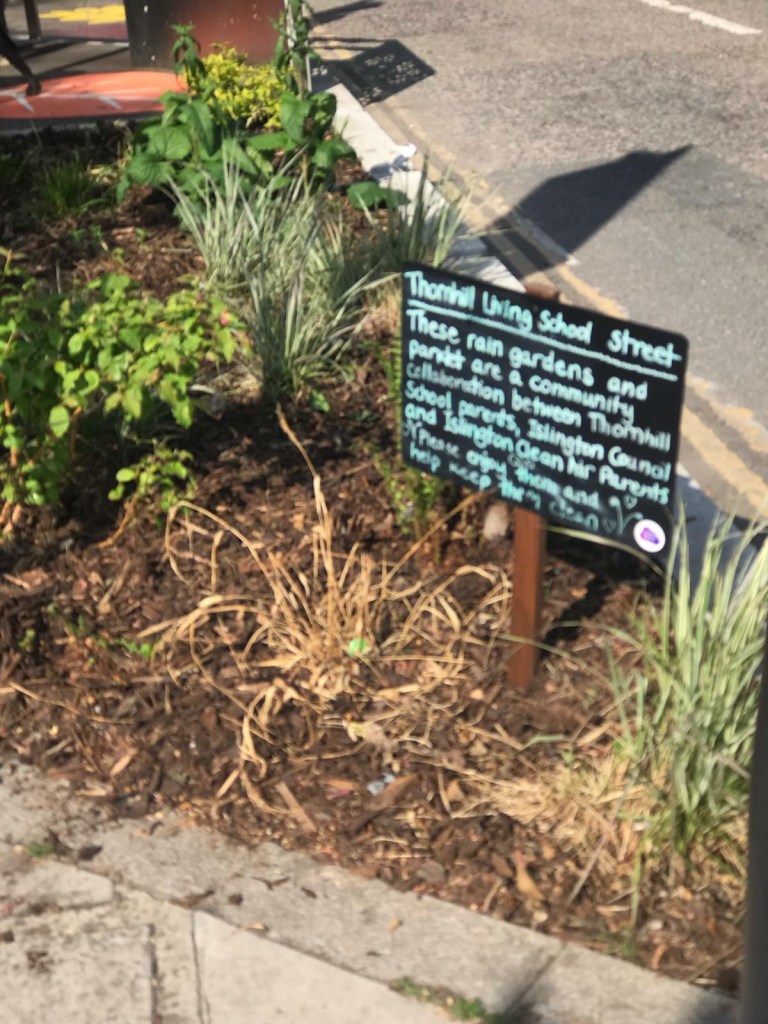
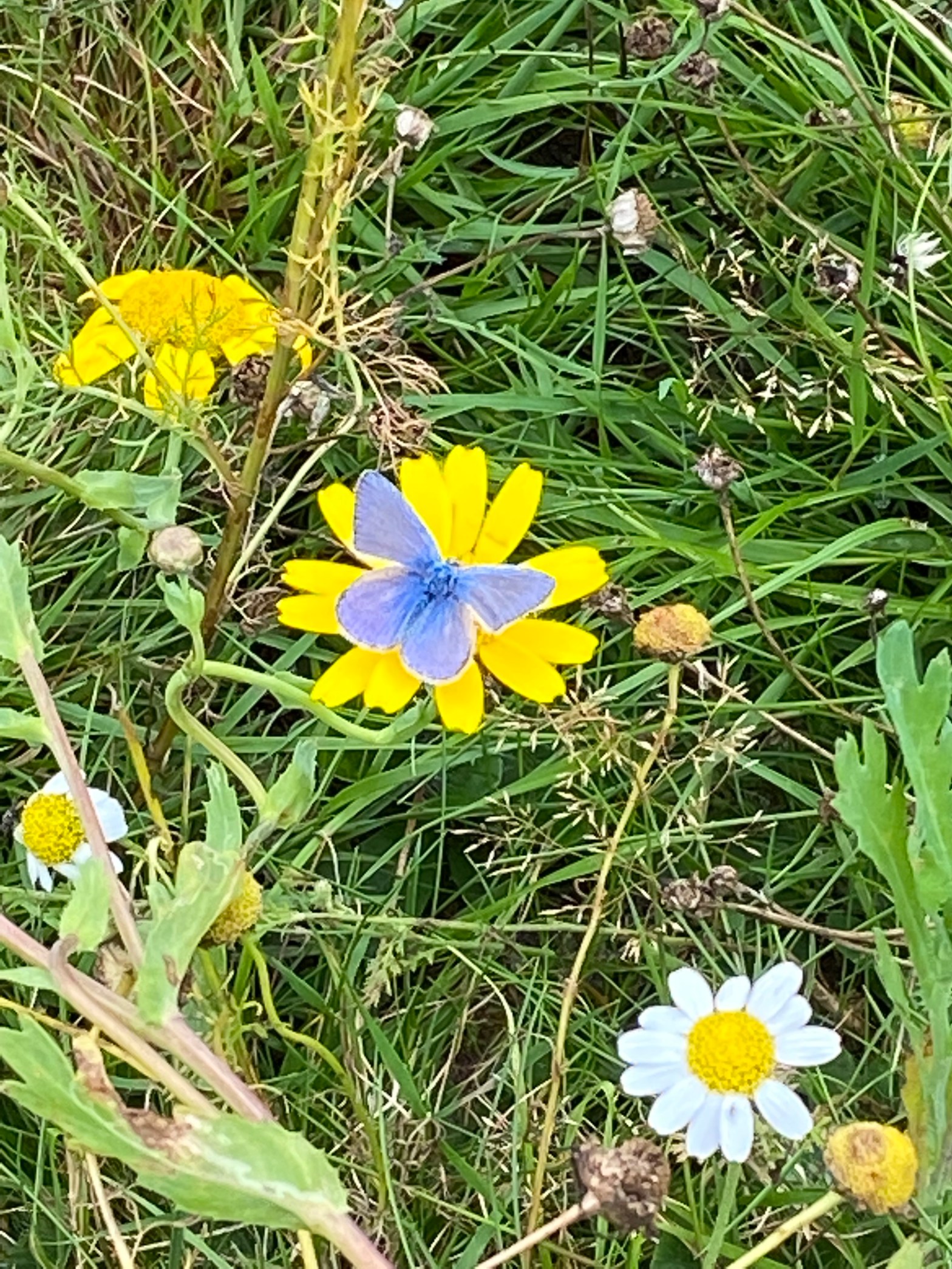
  • Three rain-gardens have been planted with a variety of plants, bringing greenery and biodiversity to the space. We know that greener places enhance people’s mood and brings positive health benefits in addition to cleaner air.
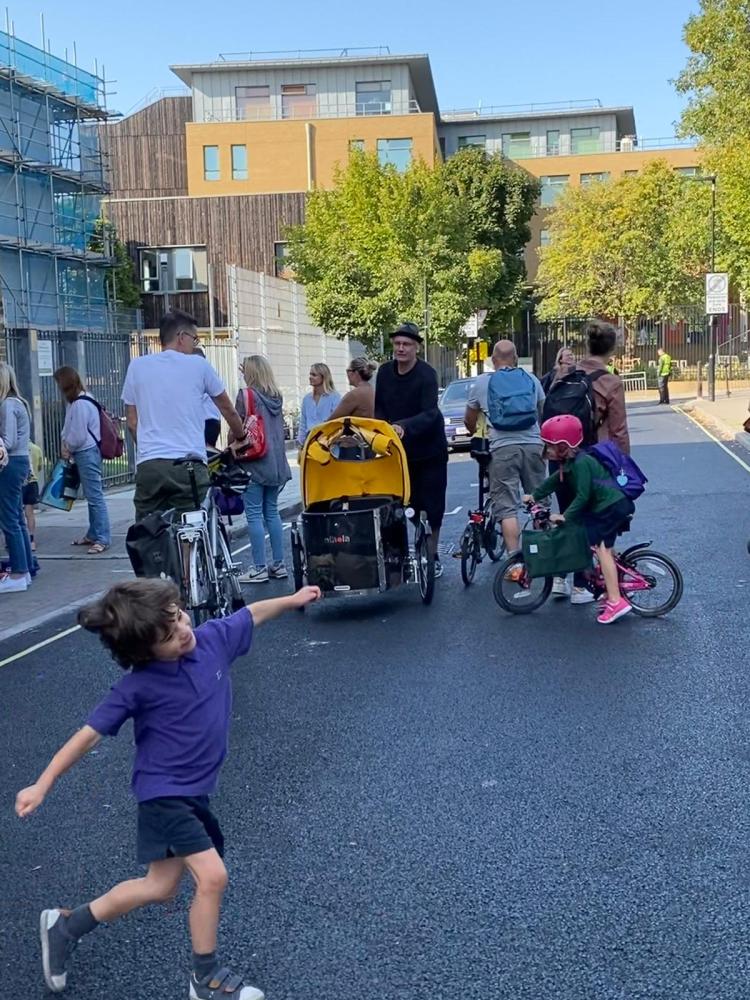
  • Cycle parking now offers a space for parents to park their bikes and cargo bikes where previously there wasn’t anywhere to leave them safely. Safe bike parking encourages parents to use active travel for the school run rather than drive.
  • A bench has been installed which is often used by all members of the community from elderly walking up the hill, dog walkers, parents, people visiting the free little library as well as visitors for the school. It’s wonderful to see the variety of people who use it.
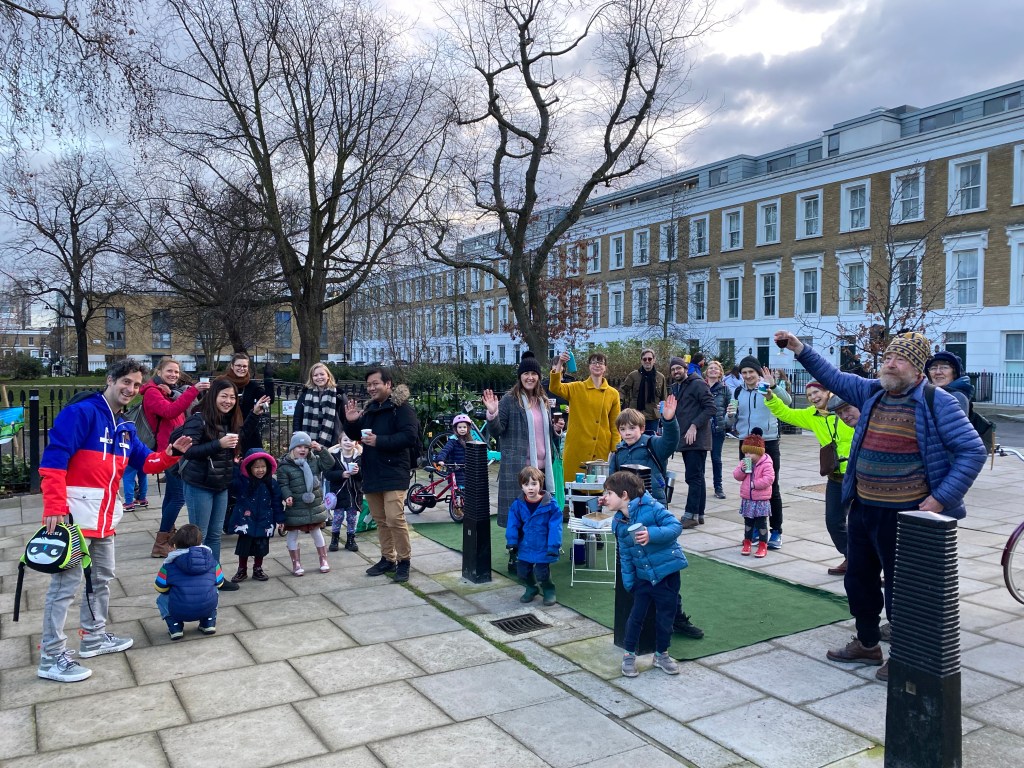
The rain gardens are well cared for by the parents and children who take turns to water and weed them and remove any litter in the area. This group of parents welcomes and encourages parents of children new to the school to join in and help maintain the rain gardens. The gardening sessions are very popular and we often get positive comments from people walking past.

The rain gardens act as sponges soaking up rainfall. Sited at the top of a hill, they help prevent heavy downpours from flooding at the bottom of the hill.

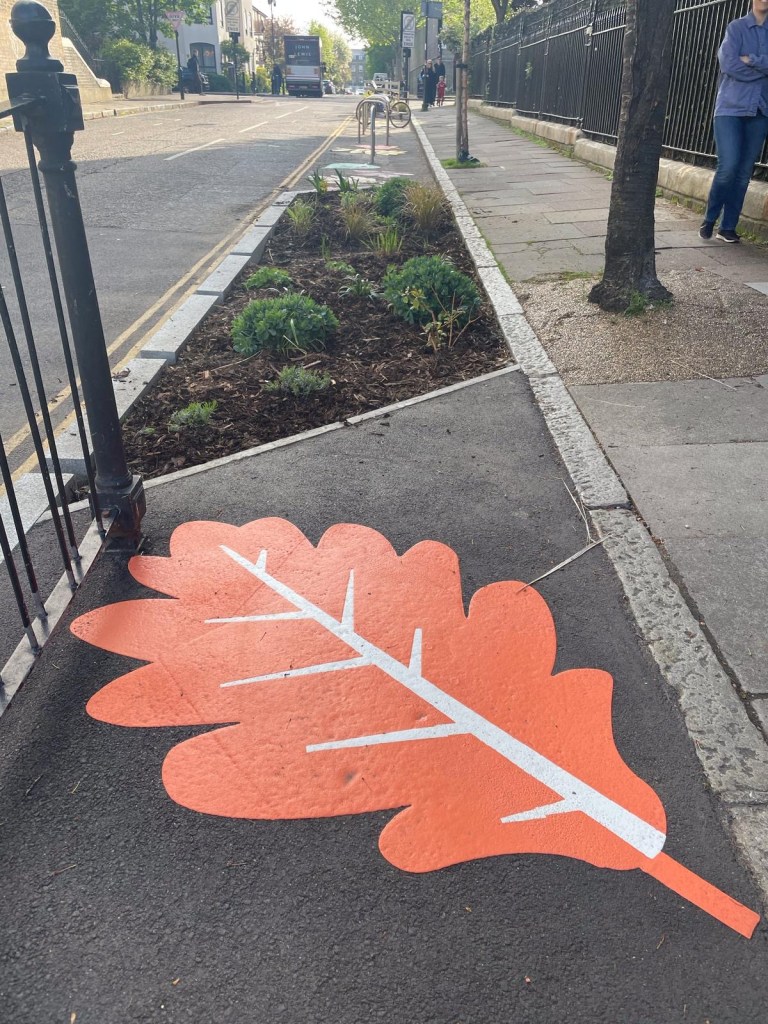
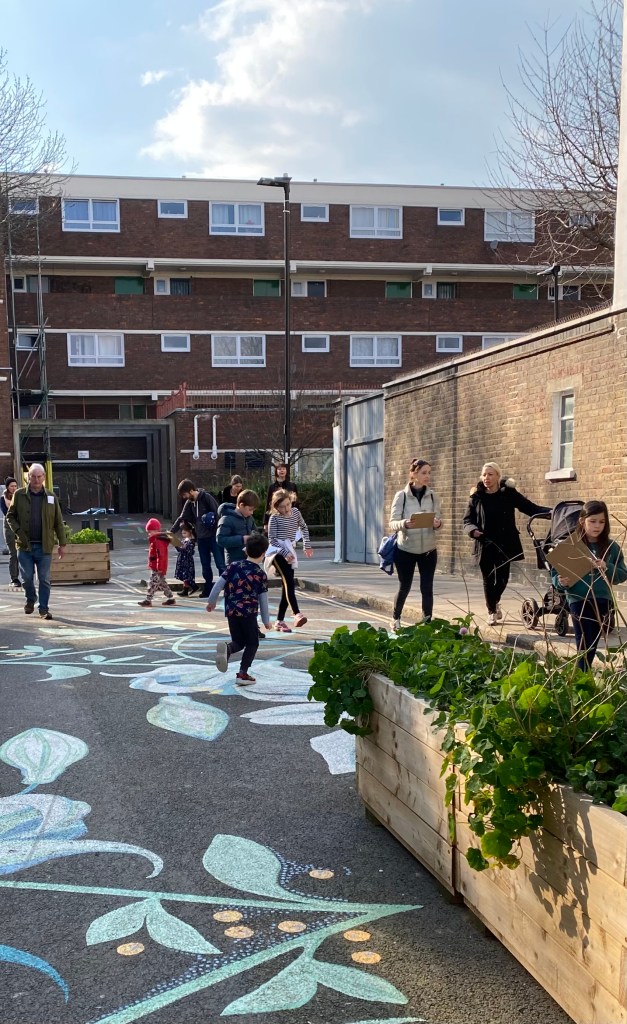
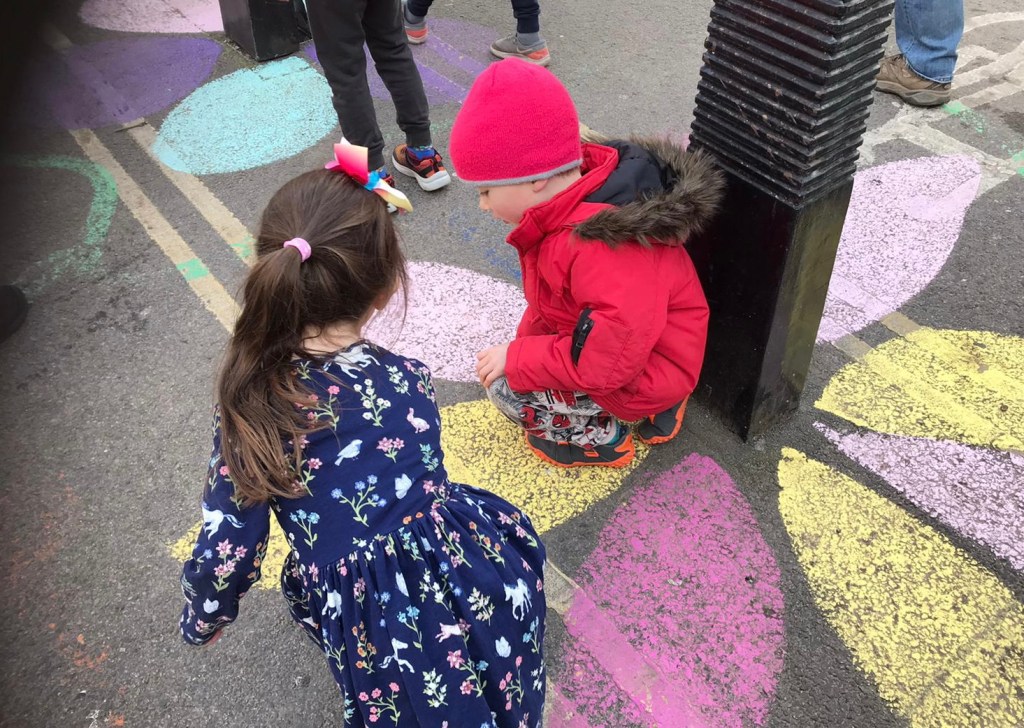
The council recently completed the project by painting brightly coloured leaves on the area which look great. These nature designs lift the otherwise grey tarmac and indicate to road users that this is a space for pedestrians and cyclists.

Cars can no longer park directly outside the school and idle their engines. There is plenty of parking available on the other side of the road and instead of cars, there is now space for adults and children alike.
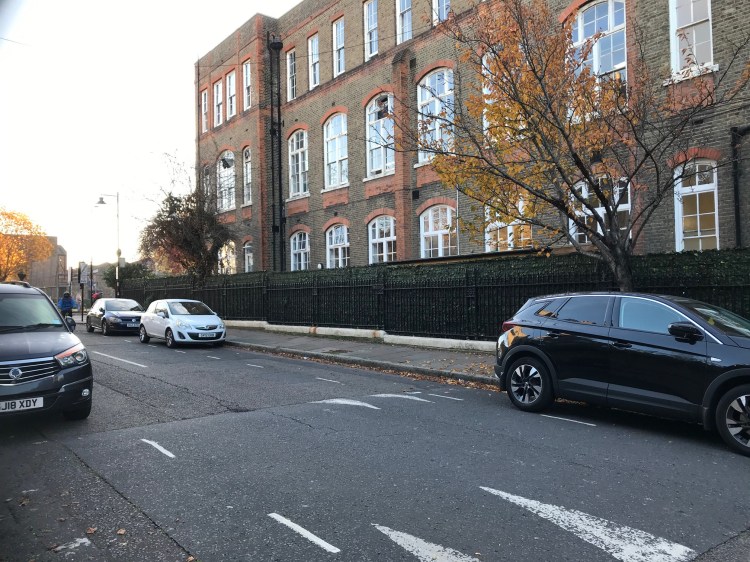
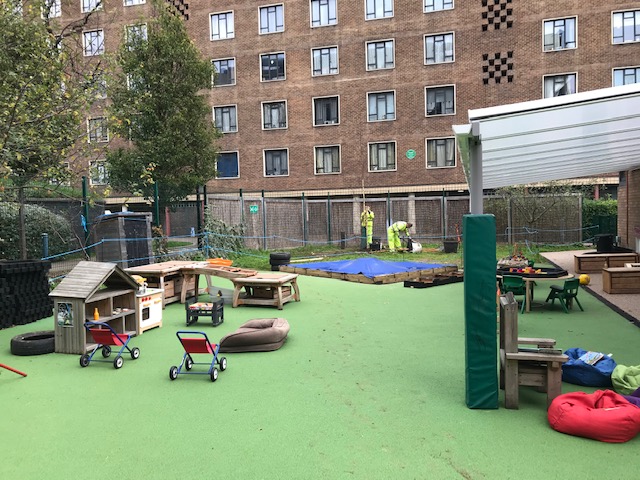
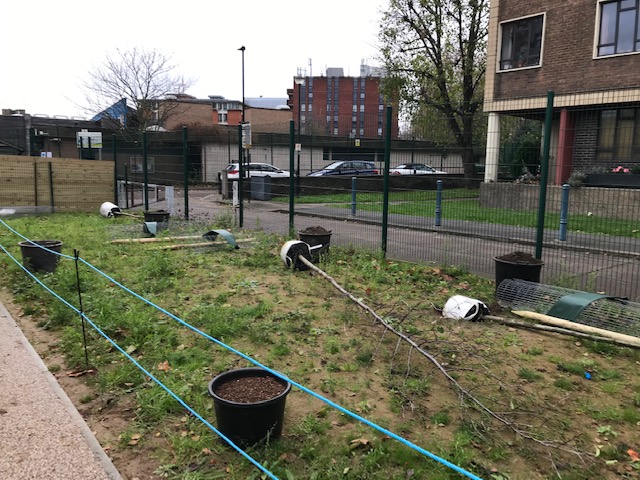
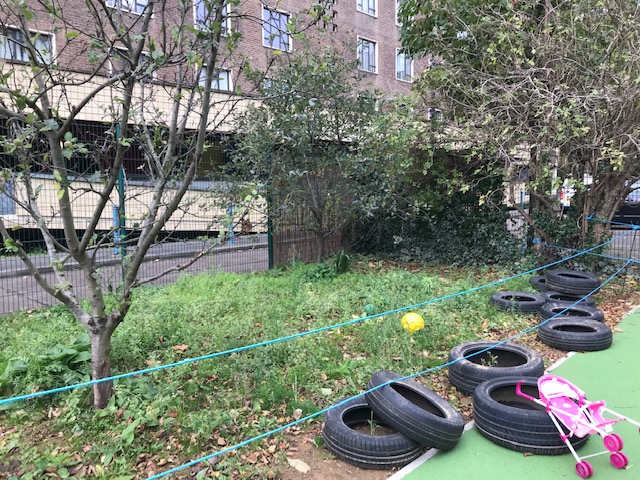
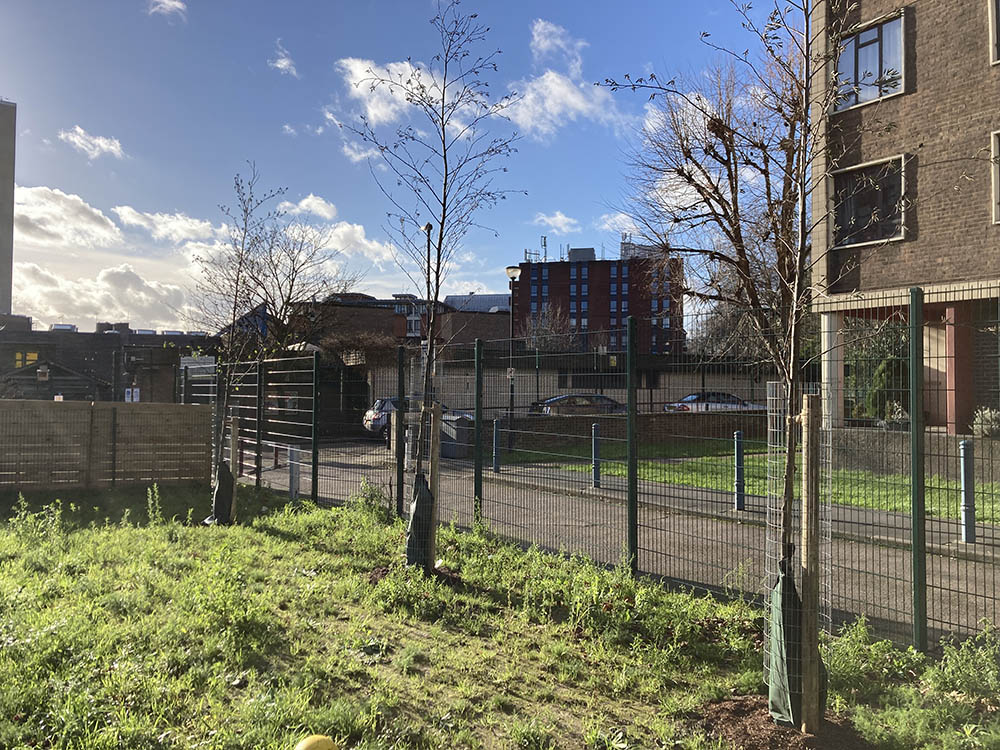
Before the rain gardens
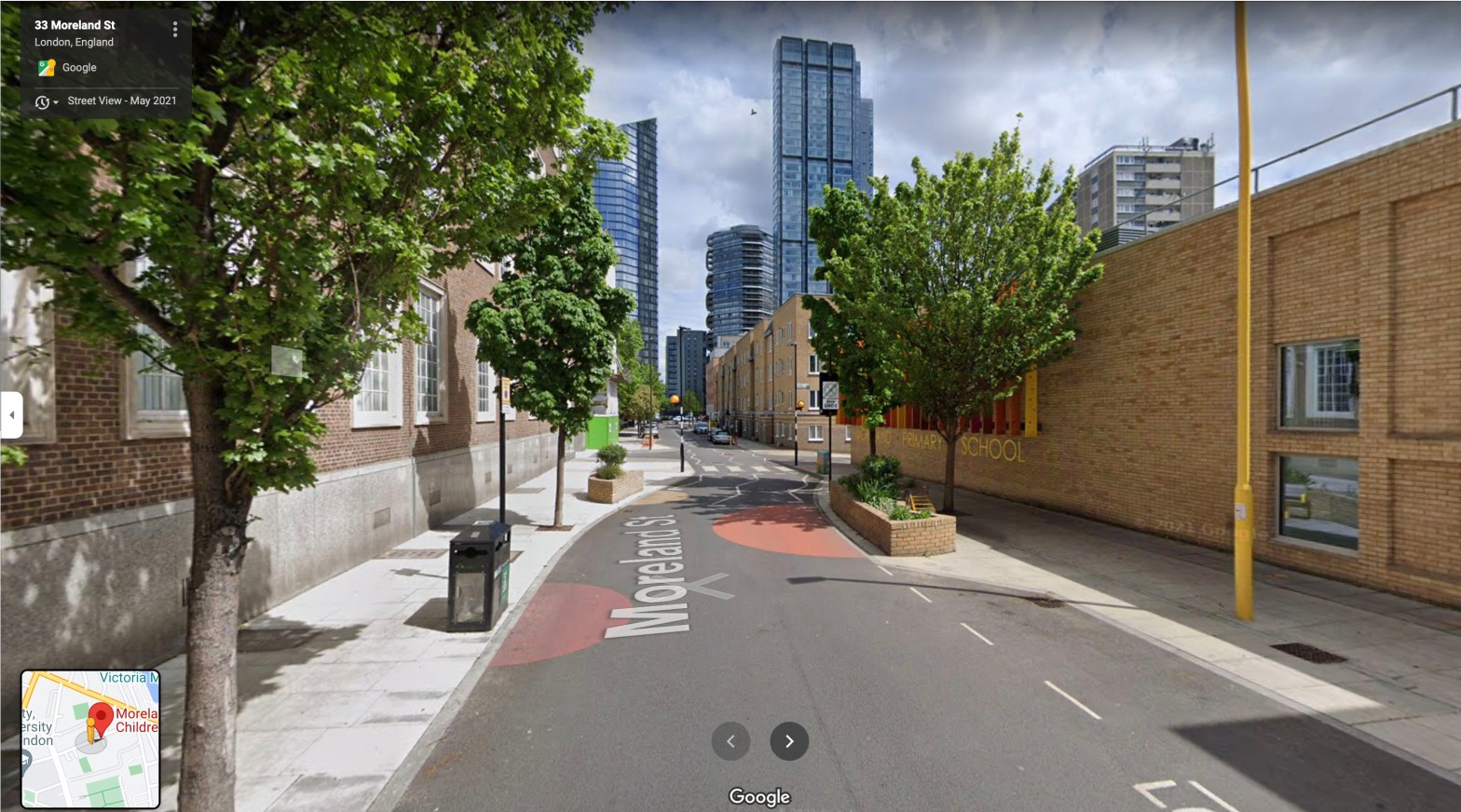
Artist impression
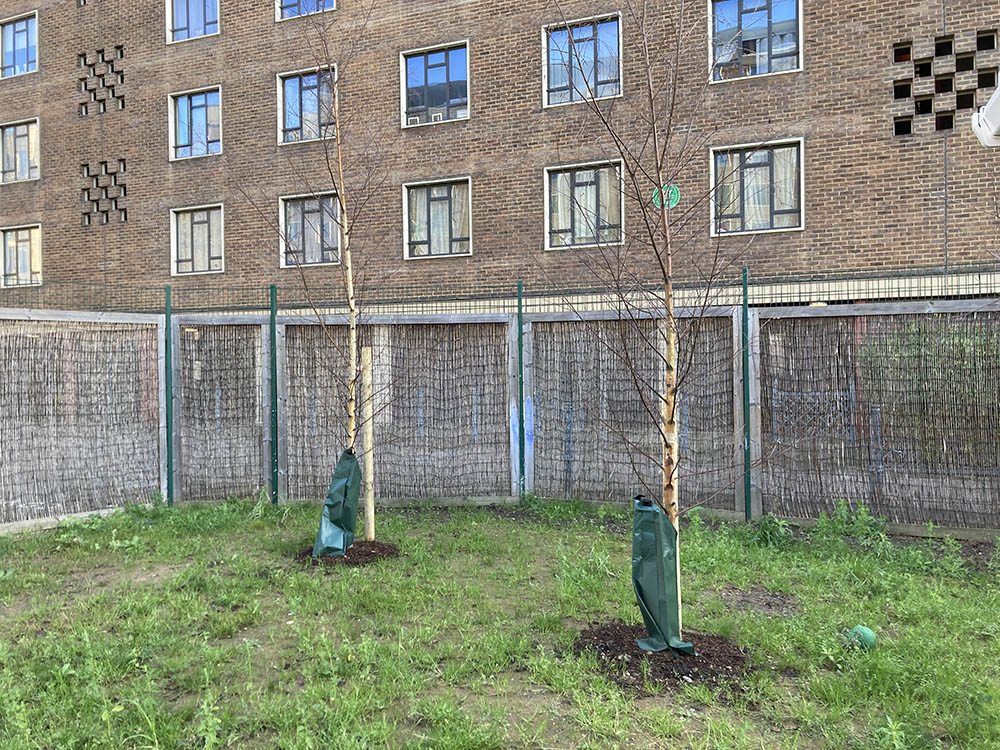
Installed rain gardens

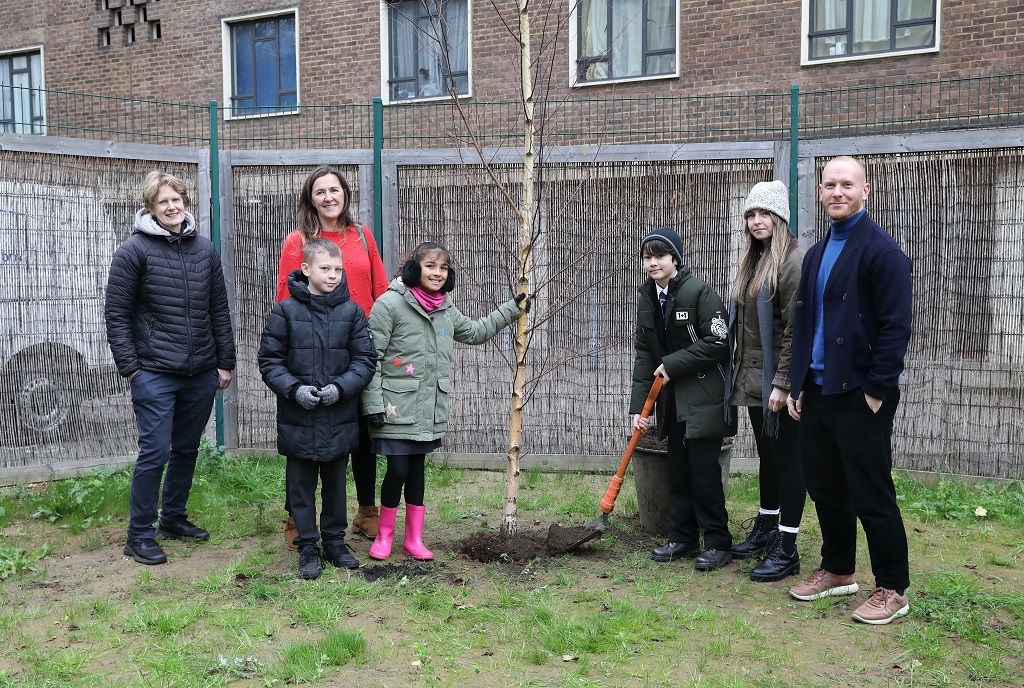
My son has now turned 8 and is in Year 3. What started as a plan to reduce air pollution for the early years classes has taken 4 years to reach completion. While the project may have taken a long time to come to fruition, it will leave a legacy for all young children who start at Thornhill over the coming years.

This small but powerful project helps everyone from school children to parents, local people and passers-by to engage with the space and appreciate the benefits of nature in our very urban neighbourhood.

The project has been a big success thanks to the collaboration with the council who have ensured the project is well supported and successful.
Our Proposals for the Islington Council Clean Air Strategy

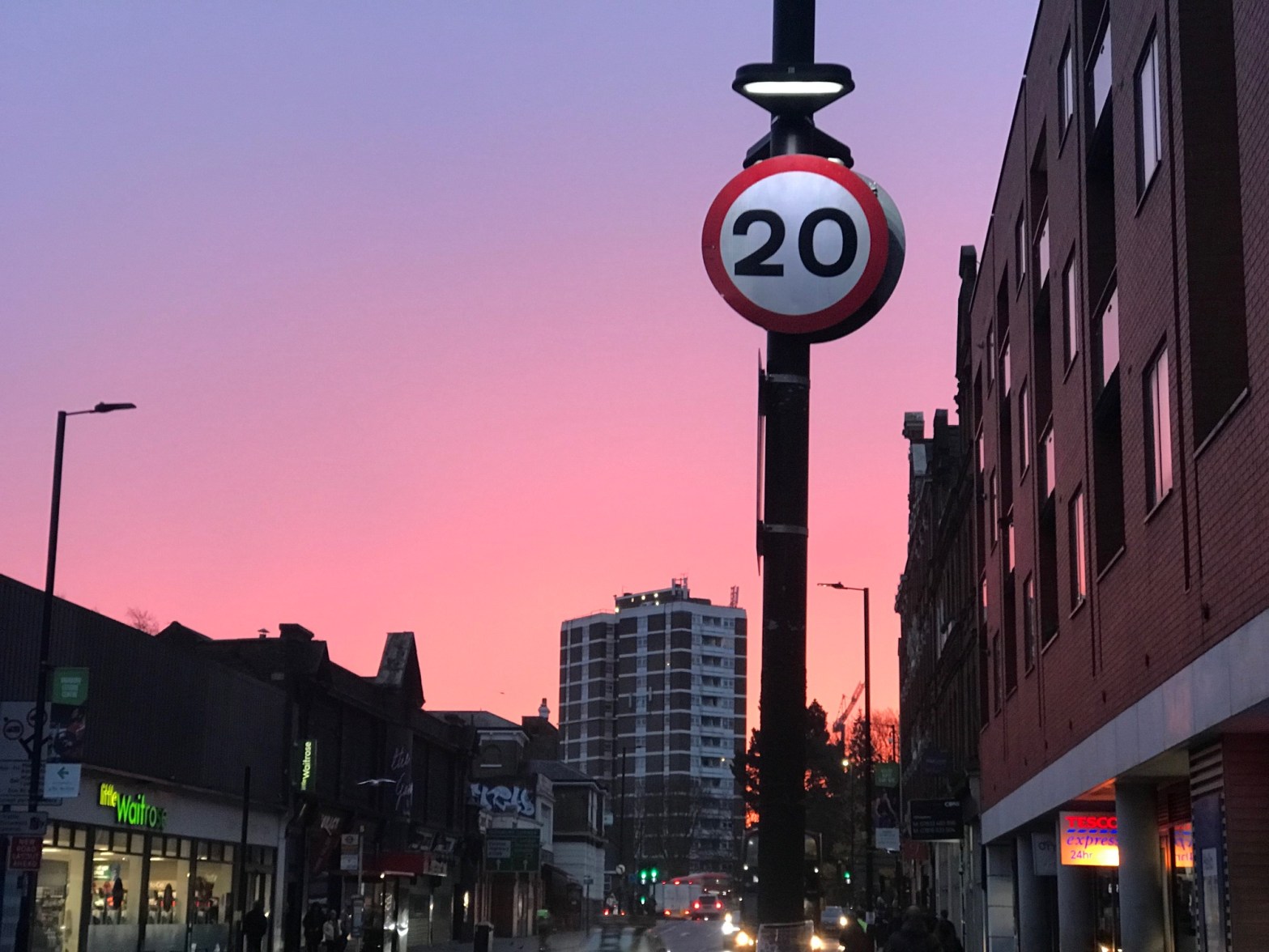
A street sign showing 20mph against a city backdrop and a pink sky

In 2024, we were asked to suggest our proposals for the 2024-2027 Islington Council Clean Air Strategy.

Below you can see our list of priorities and actions which were developed by Islington Clean Air Parents after the Clean Air People’s Assembly.

Priorities

  • Set ambitious targets for air quality around areas where children are going to school and playing
  • Set targets to reduce main sources of air pollution and plan strategy, actions and apply for funding to specifically tackle and reduce them
  • Address air pollution hot-spots – bus stops, main roads etc
  • Commit to reach WHO air quality targets
  • Ensure air quality is integrated across all council departmental policy making

Actions

  • Zero Emission School Zones – policy to prevent businesses, traffic.
  • Live clean air monitoring across the borough – look at new options coming onto the market and what neighbouring councils are committing to.
  • Education/support manual for restaurants and kitchens to reduce commercial cooking air pollution. Free air pollution monitoring. Where can people go to complain? Make it easy ie. app.
  • Heat mapping air pollution and publishing data to inform the residents of Islington where the hotspots are.
  • Building site constructions – a portion of Section 106 money should be put into improving air quality in the immediate vicinity.
  • Fossil fuel generators – require all generators to have mains connections or battery packs (film, construction, markets, fun fairs, events, ice-cream vans etc.) for anything other than short-term emergencies. Look at solutions such as lamppost connections.
  • Increased communication with residents about the dangers of air pollution through campaigns, regular events and citizens assembly and encourage residents to change habits to improve air quality.
  • Air pollution awareness zones – where air pollution is particularly high there is a short-term campaign highlighting the issues. i.e. posters on lamp posts, social media, billboards, leaflets in shops.
  • Reduce parking across the borough. Replace parking outside all schools, parks and shops with parklets, SUDs, bicycle parking including electric bikes and scooters.
  • Protect all public realm green space and leisure areas from development as a priority. Keep in line with IBC’s commitment to address climate change and increasing green and leisure space. Avoid contradictions across departments in policies. Council building developments should not be to the detriment of green space, air quality and resident’s health. (Look for alternatives such as building new housing on road stubs).
  • Implement School Streets for nurseries, primary and secondary schools.
  • Action plan for Islington to become a zero emission borough

We are currently awaiting news on the strategy. To find out more, join Islington Clean Air Parents as we campaign for clean air in the Borough. Sign up to our newsletter here.

Children Reclaim the Streets

Article by Rachael Swynnerton, featured in Islington Gazette, 22nd December 2022

We all want what’s best for the children in our lives. At Christmas, despite the current cost of living crisis, we all do our best to spoil children with toys and games. But what about something simpler and cheaper? What children need, and want, is the freedom to play in the street. A place to meet friends, walk and cycle outside their home and school whilst breathing clean air and feeling safe.

Since the second world war, children’s freedom to roam has rapidly diminished as motor vehicles have dominated our streets, resulting in a genuine threat to children’s health and safety.

However, across the world, children are re-emerging in our urban streets thanks to campaigners who have argued children should not be consigned to indoor, sedentary lifestyles or have to breathe in toxic air pollution or cross dangerous roads.  Instead, urban planning should put children centre-stage, take their views and experiences seriously, and include clear benefits for them, such as increased opportunities to play and explore.

In Islington, the council are making improvements with their People Friendly Streets scheme, which supports School Streets, playstreets, greening and Liveable Neighbourhoods (LNs). Research from Imperial College shows there are improvements in air quality on roads within Islington LNs and on boundary roads as a result. The Council have made a good start, but the scheme needs to be rolled out further and faster across the borough. Take a walk where you live. Is it pleasant for a child? If not, speak to your local councillor with some positive ideas and suggestions.

 “Join our walks and see the streets through children’s eyes, you’ll be amazed by what you will find. ”

Rachael Swynnerton, co-founder of I Spy Family Walks

Islington Clean Air Parents and Footways have been delighted to share the benefits of walking with families and young children with our very popular Family Friendly I Spy walks. We’ve been celebrating Islington’s new LNs and precious green spaces. It’s been wonderful to see children’s natural energy and curiosity allowed to flourish in streets that are child-friendly.

Join our Islington Clean Air Parents mailing list to find out about our next Family Friendly I Spy walk. Come and see for yourself how Islington is already being transformed with safer, healthier more attractive streets. Now that really is something to celebrate in 2023.

Source: Urban Playground, by Tim Gill

North London COP Climate Festival

On Saturday 12th November Islington Climate Centre, the Islington Tribune and Camden New Journal are taking a positive step to inform, empower and engage with the first ever North London COP, bringing a fantastic range of speakers and thinkers to the historic Conway Hall.

Book a spot for this free event. Tickets for individual talks can be booked separately.

Air pollution and the climate crisis are both caused by the burning of fossil fuels. In London 98 per cent of schools are in areas exceeding World Health Organization pollution limits, compared to 24 per cent outside of London.

As parents and carers, we know how worrying about dirty air and climate change feels. How can we inform ourselves, talk to our children about it, decide what action to take.

There’s no wonder we are fearful when: the High Court ruled the UK Government has breached the Climate Change Act with its inadequate net zero strategy. Little is being done to enable and encourage changes in behaviour, which would allow the UK to meet the necessary climate targets. Our own Prime Minister is now only attending COP after being publicly shamed for his lack of commitment. It’s clear we cannot rely on Government to bring a halt to climate damage. 

Many believe that it is grassroots movements that can build momentum for the change that is so urgently needed. In Greta Thunberg’s speech last month at the Southbank Centre, London, she said: “We have lost decades of communication not getting through due to distraction, delaying and denying.”

Here in North London, in collaboration with the Islington Climate Centre, the Islington Tribune and Camden New Journal are taking a positive step to inform, empower and engage with the first ever North London COP, bringing a fantastic range of speakers and thinkers to the historic Conway Hall – including a dedicated panel on how to speak to children about the climate emergency, without making them fearful.

Psychologist Megan Kennedy-Woodard will offer practical advice, including identifying unhelpful patterns of thinking. This discussion will also include the award-winning film maker Lesley Manning, whose short film, Seven, featured children talking about climate change, as well as ac­claimed author and illustrator Chris Haughton, who will be discussing his work collaborating with scientists to develop the film ‘Message from Antartica’.

“We believe local newspapers have a real, tangible role  in mobilising this kind of collective action, in facilitating debates and discussions and pushing a grassroots effort to tackle the defining challenge of our age,”

The Islington Tribune

ICAP believe everyone can make a difference. We don’t have to invent something new; we just need to get involved. There are many incredible local groups in our boroughs, find out more at the event. 

Greta Thunberg said: “we need millions of activists”.  We hope you will join the conversation on Saturday 12th November, get informed and be inspired. 

DATE AND TIME:

Saturday 12th November, 10:30am – 5pm.

PROGRAMME OF TALKS:

What role does the media play in addressing the climate crisis? (11am-12.15pm)
DR NAFEEZ AHMED, Byline Times investigative journalist and systems thinker
JUSTIN ROWLATT, BBC Climate Editor, joining via Zoom live from COP27
BEL JACOBS, former Style Editor at Metro

Lunchtime talk (12.30pm-1.30pm)
Age of Stupid filmmaker FRANNY ARMSTRONG and former Green Party leader Sîan Berry talks to CNJ Chief Reporter DAN CARRIER

Talking with children about climate change (1.45pm-2.45pm)
MEGAN KENNEDY-WOODARD, climate psychologist
CHRIS HAUGHTON, children’s author and illustrator
LESLEY MANNING, “Ghostwatch” and “Seven” film director

Law and direct action: approaches to the climate crisis (3.00-4.00pm)
ROLLIE, STOP HS2 campaigner
JSO activist (TBA)
PAUL POWLESLAND, founder of Lawyers for Nature and barrister
TIM CROSLAND, Plan B Earth director, mounted legal challenge to Heathrow’s third runway

The North London COP 
Saturday 12th November
10:00 – 17:00
Conway Hall, 25 Red Lion Square, London WC1R 4RL, UK

Book a spot for this free event. Tickets for individual talks can be booked separately.

Conway Hall has wheelchair access and food will be available from the café all day. 

10 ways to reduce air pollution

Find out how you can take positive action to reduce air pollution in Islington

Air pollution is a killer, an estimated 88 deaths were caused by air pollution in Islington last year. Many areas in the borough exceed legal levels and this has a huge effect on our health. Not only does it cause heart disease, strokes, and dementia, small particles of air pollution have been found in the placenta, causing higher rates of miscarriage, asthma and stunting the growth of children’s lungs by up to 10%. But we can all take positive action to reduce air pollution and protect the health of our families and loved ones.

1. Walk, cycle or scoot short journeys such as trips to the shop, school or visiting friends. 38% of car trips in London are under 2 miles and exhaust emissions from road traffic is the largest source of air pollution in Islington. By swapping short car journeys for active travel you will not only be reducing air pollution but the increased active travel will boost your family’s mental and physical wellbeing, and increasing life expectancy.

2. Download a copy of our Islington Clean Air Toolkit for Schools. There’s lots of helpful advice and contacts to help reduce air pollution in and around your child’s school. Islington Clean Air Parents worked in partnership with Islington Council to create this practical and easy to use guide to get you started. www.islingtoncleanairparents.uk/toolkit

3. Hold a play street. You can apply to Islington Council for your road to be closed temporarily or on a regular day of the week or month. Lots of them are happening around the borough, allowing children to play out and create a community spirit. You can apply for your residential street or even hold a school play street.

4. Avoid barbecuing and using wood stoves. Burning wood and charcoal releases fine particulate matter increasing local air pollution for your family and neighbours. Choose electric BBQs, avoid takeaways that cook on charcoal and remove or don’t install a wood burning stove.

5. Plant trees and greenery. Last year, our campaign Forest for Change saw 200 extra trees planted in Islington. You can ask you local councillors to fund tree planting in your street, replace hard surfaces in your front garden with soil and plants, leave your grass to grow and stay organic by not using any pesticides or weed killers.

6. Choose green delivery companies. Look for local companies offering bike deliveries or check they are using Royal Mail to deliver your parcel to avoid diesel fuelled vans road miles. Make sure your delivery company is environmentally responsible and support local campaigns such as NOcado, a parent-led group campaigning against plans to build a diesel-fuelled depot next to Yerbury School in Islington.

7. Heat your home sustainably. Turn your thermostat down to 18 degrees, replace old boilers, look out for the next solar panel buying scheme from Islington Council or consider installing a heat pump, you can currently get a £5000 grant towards the cost.

8. Start a clean air WhatsApp group for your school, work or street. Talk to your neighbours or other parents about your concerns about clean air, invite them to join you and share information. Together you can make a bigger change whether that’s campaigning for a School Street, traffic reduction planting and looking after local trees, and improving your local environment.

9. Reduce Indoor pollution. Cooking is a significant contributor of indoor pollution and can be trapped in your home making pollution worse inside than out. Open windows for an hour a day, ideally early morning or evening to release indoor pollution and refresh oxygen levels.

10. Join Islington Clean Air Parents. Find support from like-minded people and get involved in events and campaigns to improve air quality. Since we started nearly 4 years ago we have held a public Clean Air event at Islington Town Hall, campaigned for School Streets, planted 200 trees in the borough, held clean air play streets, organised regular family walks and are creating a new woodland in the heart of Islington.

You can become a member of Islington Clean Air Parents by signing up for our newsletter. Follow us on twitter, there is a clean air community and lots of helpful information shared. If you’d like to get involved in ICAP please email us islingtoncleanair@gmail.com

www.islingtoncleanairparents.uk

Follow us on twitter @air_parents

References: https://www.london.gov.uk/sites/default/files/air_quality_for_public_health_professionals_-_lb_islington.pdf

*72 deaths in Islington, figure provided by Simon Birkett, Clean Air in London

I Spy Family Walk: Spring

Join us for the next Family Walk on Sunday, 22nd May as we explore Highbury and Islington’s largest nature reserve with a guided tour, I spy game and activities for children to enjoy.

On Sunday 20th March we gathered on a sunny afternoon in Kings Cross for our Spring walk. This was the third in the series of seasonal family walks and part of the Nurture events programme. We began at Camley Street Natural Park, near Kings Cross Station.  It’s spectacular to see that wild green spaces can nestle within even the most urban environment – nature really can flourish when it’s given a chance!

My children and I had the pleasure of planning the I spy game with David and his lovely wife Sarah.  As the walkers arrived, everyone’s excitement grew in anticipation of the afternoon ahead. 

It was my children’s natural curiosity that inspired me to create an I spy scavenger hunt to make walking more interesting. Sharing the idea with more children is a lot of fun, they are so inquisitive and keen to learn. It’s lovely to see their excited smiling faces as they explore local streets, which are now becoming safer and healthier to do through areas with lower traffic. We look forward to seeing more traffic reduction across the borough.

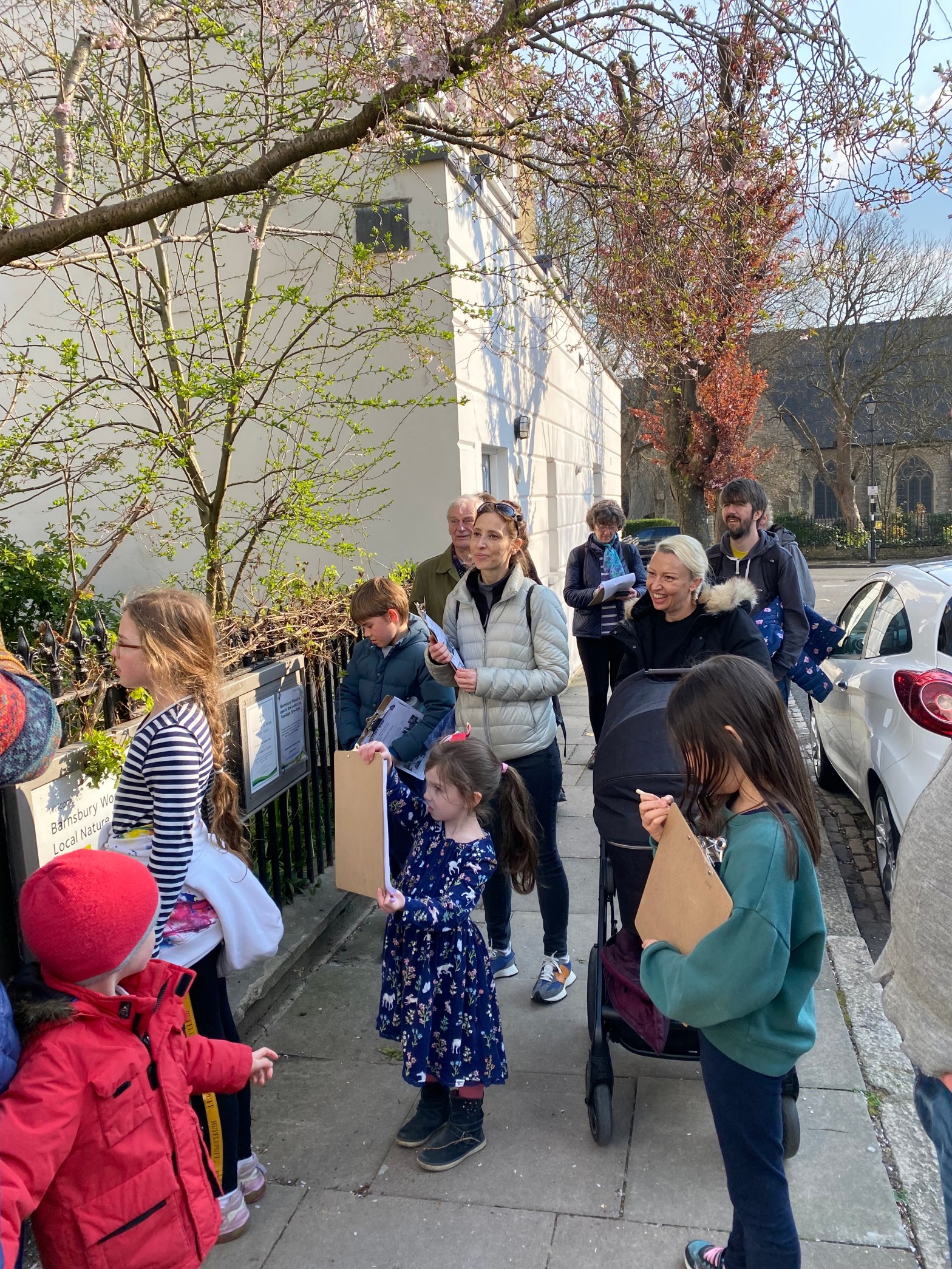
Excited children with clipboards in hand began the jam packed I spy scavenger hunt. We walked along the canal through Lewis Cubitt square and an ornamental gardens. Then a stroll across to Crumbles Castle in Bingfield Park, a wonderful example of the long history of community action to improve the lives of children in Islington.  

 “Walking in Islington is fun! There are lots of unusual things to see, if you look around.”

Louis, age 9

Our next stop was at a more recent community project, Cultivating the Cally, in Freeling Street. In this pocket park, the tarmac has been transformed and instead of being filled with parked cars it has well-cared-for planters and a beautiful piece of public art commissioned by Islington Play Association. Children played in the flower painted street filling the space with absolute joy.

We headed into Barnsbury to take a closer look at the architecture of the West Library and check out the mini-library outside Thornhill School. We found a hidden wood, a secret passageway to Upper Street, lots of spring flowers and blossom trees. 

We finished with a well-earned cup of coffee at the Italian deli, Angel Delicatessen, Cross Street.  Homemade biscuits were quickly snapped up by hungry children before setting off home. One parent commented “My children will sleep well tonight!”.

We noticed a stark contrast along this route. At the start children played, parents relaxed as they enjoyed the freedom and safety of low traffic areas. Suddenly, this was curtailed as we left safer streets behind us and walked through Barnsbury. We walked through several roads: Hemingford, Lofting and Thornhill, where we were suddenly confronted with narrow streets, dominated by vehicles, creating noise, road danger and air pollution. It was a relief to reach Cross Street, the latest People Friendly Street, which was much more pleasant. We hope that safer and healthier streets will be created across Islington very soon.

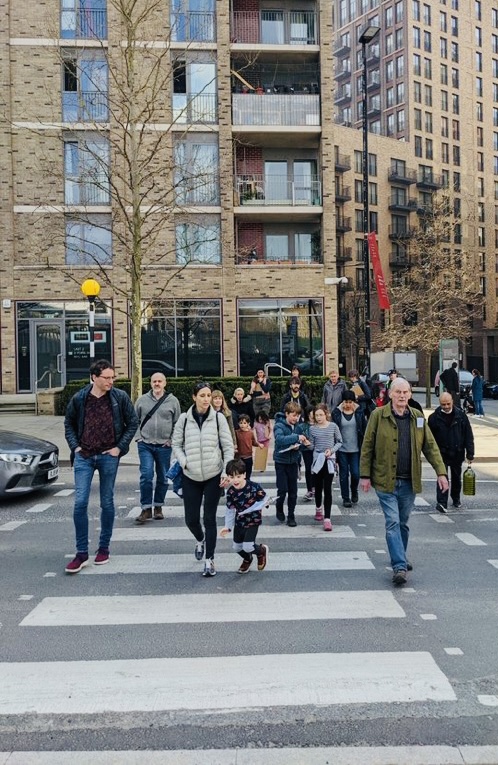
It was a joy to join Islington Clean Air Parents (and children) in exploring a wonderful new walking route which links King’s Cross with the Cally, Barnsbury and Upper Street. The new zebra crossing on York Way has made a huge difference. We are really looking forward to improvements to Bingfield Park and the path through the Bemerton Estate. 

David Harrison, Footways & Islington Living Streets

Both Living Streets and Islington Clean Air Parents were delighted to share the benefits of walking with families and young children.  Walking is not just about getting around – it’s also a chance to get some exercise; chat with friends and family and enjoy your surroundings. Walking also improves mental health and children’s ability to learn. Streets that are safer and healthier for children to walk, cycle, and scoot are better for everyone. 

Motor vehicle traffic accounts for 50% of air pollution in the borough, which is bad for our health, especially for children because it stunts the growth of their lungs causing life-long health issues.  

However, one-third of journeys are under 2km, which is easily walked by those who are able. Luckily, there is huge potential for walking in Islington and it  plays a significant part in tackling air pollution and climate change. 

Join us for our next family nature walk through Highbury and Islington’s biggest nature reserve.

BOOK NOW! 22nd May 2022, Spring Family Nature Walk

To register for this and other events please follow our Nurture series which we are running in collaboration with Inspiring Sustainable Islington. 

Living School Streets

A new concept for creating clean air hubs in our community that create safe environments for people to walk, cycle and scoot.

Islington Council has successfully implemented 35 school streets across the borough, reducing Nox by up to 83% outside schools. This transformation is radical and shows the opportunity to reduce air pollution further.

The vision for Living School Streets is for local communities to reimagine the street space outside schools and reprioritise usage for the safety of children.

Key stakeholders to include in the vision making include; parents, school, residents, housing associations, the council, local community groups.

Our Vision

Traffic needs to be either filtered or reduced in speed to 5mph. The shape of the street can be altered so drivers need to navigate curves rather than speed on a straight road. The road can be coloured to identify the change of road use.

All parking should be removed to prevent idling and unnecessary car journeys.

The car parking space and zig zag chevrons can be repurposed into rain gardens or planters. Trees and shrub layers planted to attract wildlife into the urban environment.

Street furniture can be changed to be child friendly and replace metal railings with child focussed bollards.

Nearby green space can be opened up to create a natural flow and blend the environments.

Funding

Each Living School Street group may want to include all or some of the elements. Funding may be provided by the local council greening fund or the group can access business sponsorship or crowdfund in the community.

Long term

Living School Streets reimagine the purpose of our streets and will demonstrate how we can reimagine our streets everywhere.

I Spy Family Walk: Winter

On Sunday 9th January, we were delighted to that the sun was shining for our Winter Family Walk. We began at Asteys Row Playground in Canonbury and walked to Arlington Square in St Peters. 

Following the success of our Autumn family walk David and I created another interesting walk through hidden walkways and secret routes in St Mary’s before heading to St Peters and along the canal tow path to Arlington Square.

Walking through streets with lower traffic enabled both adults and children to feel safe and able to look around and enjoy their surroundings. We discovered many hidden gems from magnificent ancient trees to contemporary street art, the highlight was visiting a hidden garden in St Mary’s.

 “When I’m walking with my children they always spot interesting things. It was their natural curiosity that inspired me to create scavenger hunts to make walking more fun.”

 Rachael Swynnerton, Islington Clean Air Parents

When our walk came to an end there were lots of smiles and rosy cheeks as we enjoyed some well-deserved hot drinks and biscuits.

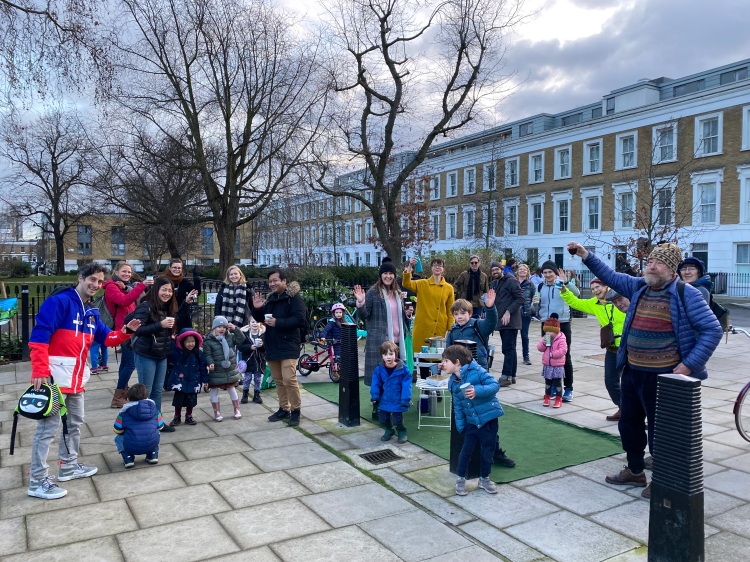
For this walk we were keen to create a space for people to come together.  So, with some help from our friends, we gathered at a Parklet. It was lovely to see different generations in conversation while children played games in the local square until twilight. My children certainly had a very memorable afternoon and good night’s sleep!

Walkers gather at a Parklet, St Peters, Islington

Both Living Streets and Islington Clean Air Parents were delighted to share the benefits of walking with families and young children.  Walking is not just about getting around it’s also a chance to get some exercise, chat with friends and family and enjoy your neighbourhood. Walking improves physical and mental health and childrens ability to learn. Walking becomes more enjoyable for all when our neighbourhoods are for people and not dominated by cars.

Motor vehicle traffic accounts for 50% of air pollution in the borough, which is bad for our health especially children, because air pollution stunts the growth of their lungs causing life long health issues.  

However, one third of journeys are under 2km, which is easily walked by those who are able. Luckily, there is huge potential for walking in Islington and it  plays a significant part in tackling air pollution and climate change. 

Join us for our next family walk in Spring. As the seasons change it’s wonderful to see nature comes back to life. We will explore all that nature has to offer in our streets and precious green spaces.

BOOK NOW! 20th March 2022, Spring Family Walk

To register for this and other events please follow our Nurture series which we are running in collaboration with Inspiring Sustainable Islington. 

More events this month include one of our own projects, Forest for Change. Lucy Facer will present ‘How to grow a forest’ on Wednesday 26th January. Register now!

Hugh Myddelton School Pocket Forest

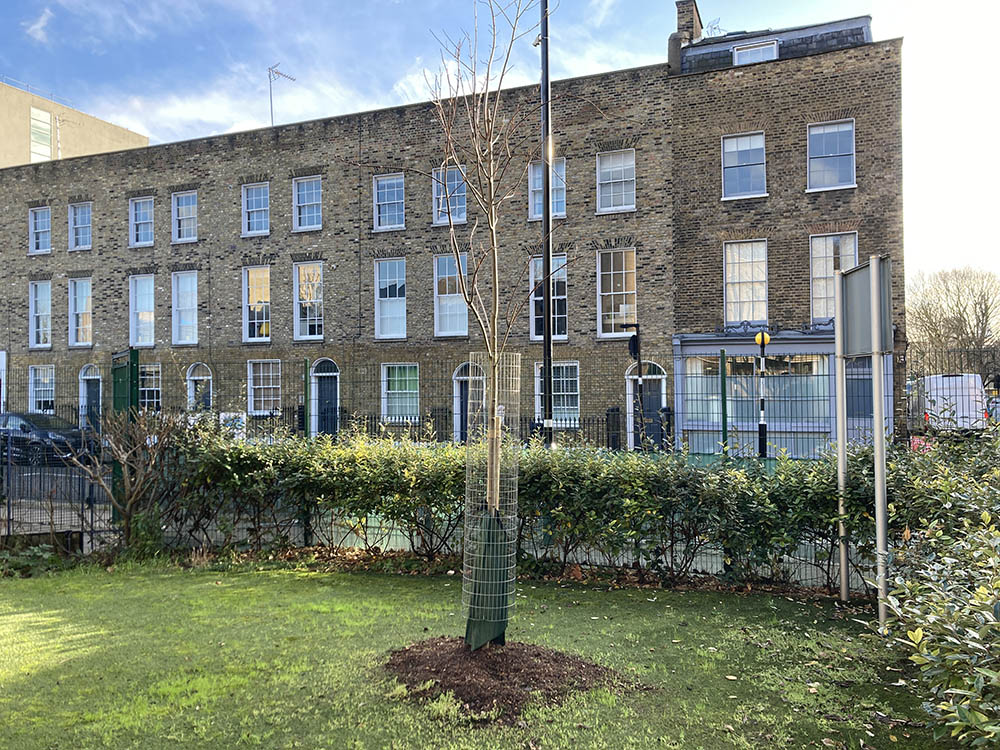
Six Islington Forest for Change trees have been planted in a Clerkenwell school playground to create a natural play area, provide clean air and address climate change.

One of our goals for planting Islington Forest for Change trees is to benefit as many school children as possible. So when deciding on locations for the 200 trees, we prioritised planting locations in and outside schools.

Hugh Myddelton school children in the south of the borough are exposed to high levels of air pollution during their school day. So when they got in touch we were very keen to help.

Associate Head Tim Barber heard about Islington Forest for Change through our campaign and asked if the nursery could be a potential location. He already had plans to create a natural play area for the nursery and was keen to plant some trees.

“We want children to be able to be themselves when they play, even if that means getting dirty. The new playground will give children access to play in and around the trees during their day and bring all the benefits that being in nature provides. We are strong advocates of forest school and will now able to provide this on site.”

Tim Barber, Associate Headteacher

The trees are an important part of the naturalisation of the playground in an otherwise urban environment and will bring numerous benefits to Hugh Myddelton school children. In addition, the school will be planting a hedgerow along the fences creating a green wall that will shield the children from the surrounding car park. The ground will be left to become a meadow and for leaves to fall and rot, returning nutrients to the ground. Tim understands that allowing this natural process to take place, rather than keeping manicured lawns, will nourish the trees. Being able to kick around in the leaves during the autumn, squelch in mud doing the winter and see the blossom in spring will enable children to experience and appreciate the cycle of nature.

The six trees bring greenery into an otherwise urban environment. The increase of nature and green space will bring mental and physical health benefits to the children and help improve their learning. In addition, they reduce the risk of flooding, provide shade on hot days and places for children to play. They release oxygen and store carbon, addressing climate change.

Planting a group of trees together means they are more likely to thrive and live healthier, longer lives. Under the ground, the trees communicate to each other, sharing nutrients. Their positive effects against climate change are amplified when they are planted in a group.

Islington Forest for Change is a campaign led by Islington Clean Air Parents and green partners. The trees were donated to us by the Forest for Change exhibition at Somerset House in June 2021. We successfully crowdfunded to fund this project and it was incredibly well supported but residents. Our team also engaged councillors who donated LIFF funds from 15 out of the 16 wards. We are working in partnership with Islington Council and their tree team to plant the trees and agree suitable locations. Our objective is to see them planted in areas most needed and that the whole borough benefits from them.

Islington Council are planting 450 trees this year so Islington Forest for Change trees increases this target by 40%. This project has highlighted the passion residents have for trees and their wish for more in their neighbourhoods. We would like the council to increase their planting targets and aim for 40% street canopy cover by 2030.

Islington Forest for Change is a successful collaboration between community, council and business, made possible by the hard work of a team of volunteers keen to bring positive change to the borough.

Schools and parents interested in greening a playground, planting hedges, trees or even a pocket forest please email us: islingtoncleanair@gmail.com

Nurture Workshop Series

Nurture: The Environment and You – working together to protect and restore. Get informed, get inspired and get involved

To ‘nurture’ is to care and protect something that is growing. This series of workshops will provide the tools you need to nurture yourself, your family and your environment.

Whether you are just beginning to think about climate change issues or are already involved in positive change there is something for everyone. We will cover key aspects of our daily lives, such as eating well, gardening and growing food, the health benefits of walking, child-friendly streets, local wildlife, tree planting and more.

Gain a better understanding of climate change, how it will affect you and how you can make a difference in your life and local community. Each session will be led by  a guest speaker with an opportunity to ask questions and share ideas.

Launch event Tuesday 30th November, at 7:30pm

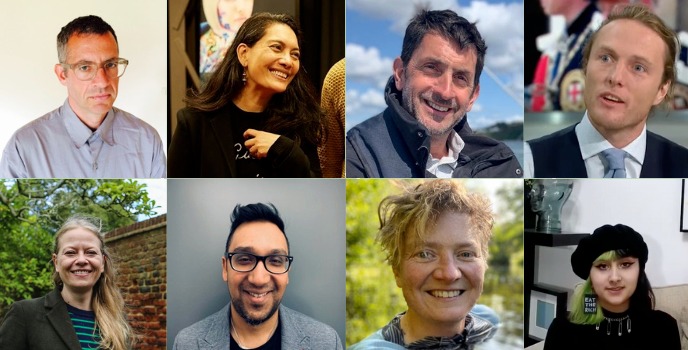
David Saddington, Head of International Nature Campaign COP26, Department for Business, Energy and Industrial Strategy, our keynote speaker. He was joined by seven workshop leaders who will give an overview of their events which run through to late Spring 2022.

We are delighted to be collaborating with the brilliant Inspiring Sustainable Islington to bring you this series of free workshops. It is designed to make taking personal action over climate change more manageable and seem less daunting. 

Climate change can seem very overwhelming. Although scientists have been warning about the impact of human behaviour on our planet for 30 years, it has suddenly hit the headlines over recent months. Firstly, in August when the IPCC report said it’s “code red for humanity”, it is proved that Global warming is a result of human greenhouse gas emission and that it’s having a catastrophic effect on our planet. Then again, during COP26, the global United Nations summit about climate change and how countries are planning to tackle it. 

The United Nations has made clear that the world needs ‘urgent climate action’ to limit carbon emissions and keep temperatures below 1.5C. Sadly, the outcomes of COP26 are disappointing. However, life goes on, but we know it’s not ‘business as usual’; colossal change is required and it needs to happen fast.  Islington is the 6th borough most vulnerable to climate change (source: GLA Risk of Climate Change). We are a very densely populated area, with very little green space (and a lot of concrete).

The planet is our home, and it needs nurturing. We cannot solve the global crisis on our own, but we can all make a difference in our daily lives by taking action to restore and protect our environment.

We hope to fast-track you to finding practical solutions in your daily lives:

  • Get informed. Understanding the problem helps us find solutions;
  • Get involved in positive change. Small efforts can make all the difference. You can change your own life and be an inspiration to others;
  • Join or start a campaign and work with others on causes you believe in;
  • Encourage your family, school and employers to live in an eco-friendly way;
  • You can make a difference in your life with positive action. 

Other topics which will be included in the series: Climate Safe Streets,  Healthy Streets Scorecard, Regenerative Farming & Rewilding, ethical finance and how to live within your carbon budget. If you are passionate about a topic and would like it to be included in this series, do get in touch; we’d be delighted to chat.

If you missed the launch of Nurture on 30th November, don’t worry, we recorded it !

  • Rachael : context and introduction to NurtureIslington 02:08
  • David : keynote speaker: 07:04
  • Ursula: environmentally sustainable diet: 32:30
  • Mike: why should we care about birds: 44:26
  • Emma/Rachael: I-Spy and Footways local walks: 50:09
  • Brenda: how to achieve community parklets: 56:42
  • Lucy: why trees are our friends: 01:02:26
  • Melanie: our health, the NHS and the climate emergency: 01:09:46
  • Farmer Tom: regenerative farming: 01:12:44
Nurture Launch Event, 30th November 2021